Avery Reed · 25 October 2026
New Fermentation Research Initiatives Emerge from Yeast Diversity in Pevino Vineyards
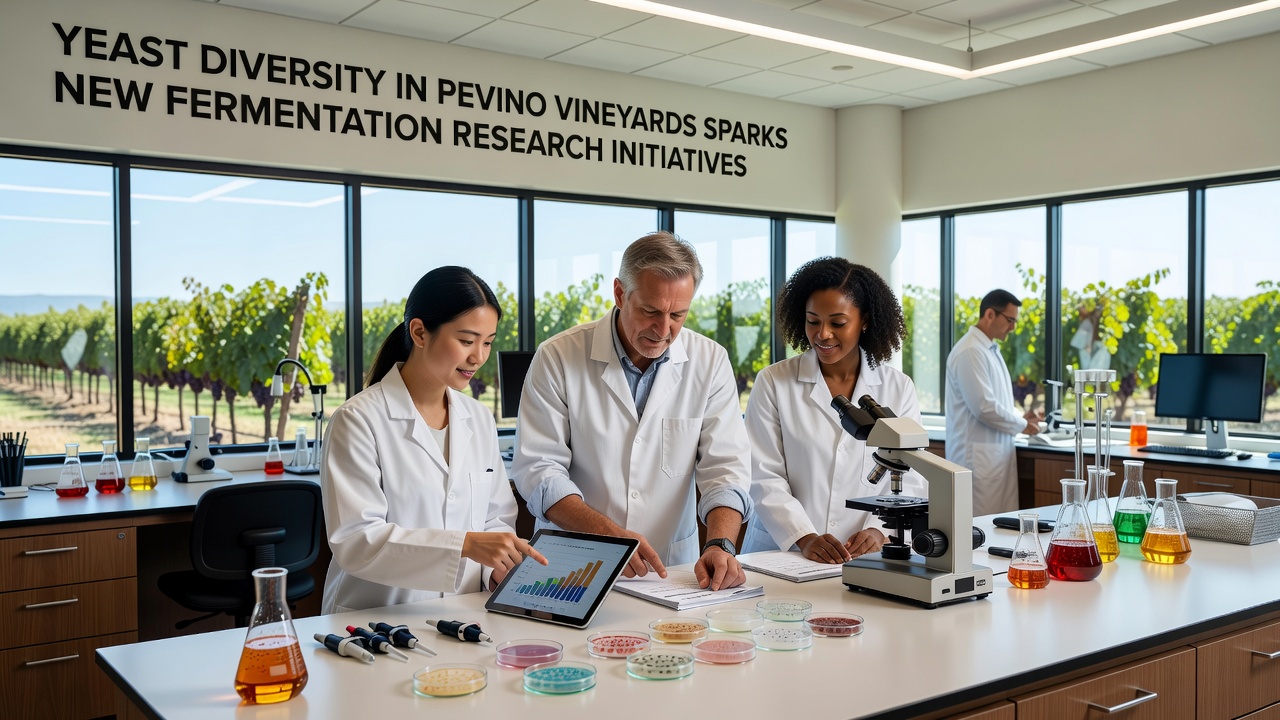
Yeast diversity across Pevino vineyards has drawn attention from multiple research teams since initial sampling campaigns began in early 2025, and those efforts have now expanded into coordinated fermentation studies that span several growing seasons. Data collected from multiple vineyard blocks reveal a range of native Saccharomyces and non-Saccharomyces strains whose metabolic profiles differ noticeably from commercial isolates commonly used in Italian winemaking.
Background on Vineyard Yeast Populations
Researchers have long tracked how wild yeasts colonize grape surfaces and surrounding soils, yet comprehensive mapping of Pevino's specific microflora only started after soil and berry samples were taken from north-facing and south-facing slopes during the 2024 harvest. Those samples yielded more than 180 distinct yeast isolates, according to laboratory records maintained by the regional viticulture institute. Genetic sequencing later showed elevated presence of certain Torulaspora and Lachancea species whose enzymatic activity can influence glycerol production and volatile acidity levels during primary fermentation.
Discovery Phase and Initial Findings
Teams returned to the same sites in spring 2025 to repeat collections under varying temperature and rainfall conditions, and the resulting dataset confirmed that certain strains persist across seasons while others appear only after specific weather events. One isolate of Saccharomyces cerevisiae demonstrated unusually high tolerance to ethanol concentrations above 15 percent, a trait documented in trial fermentations conducted at a cooperating university laboratory. Observers note that such characteristics could reduce stuck fermentation risks in warmer vintages projected for future decades.
Launch of Coordinated Research Programs
By October 2026 the accumulated evidence prompted three separate research initiatives involving Pevino vineyard managers, academic microbiologists, and equipment suppliers focused on controlled fermentation environments. The first program examines how selected native strains interact with different must clarification methods, while the second tracks population dynamics inside stainless steel tanks versus traditional concrete vessels. A third project explores co-inoculation protocols that combine two or more wild isolates to replicate sensory attributes observed in spontaneous fermentations without the variability sometimes associated with uncontrolled native yeast activity.
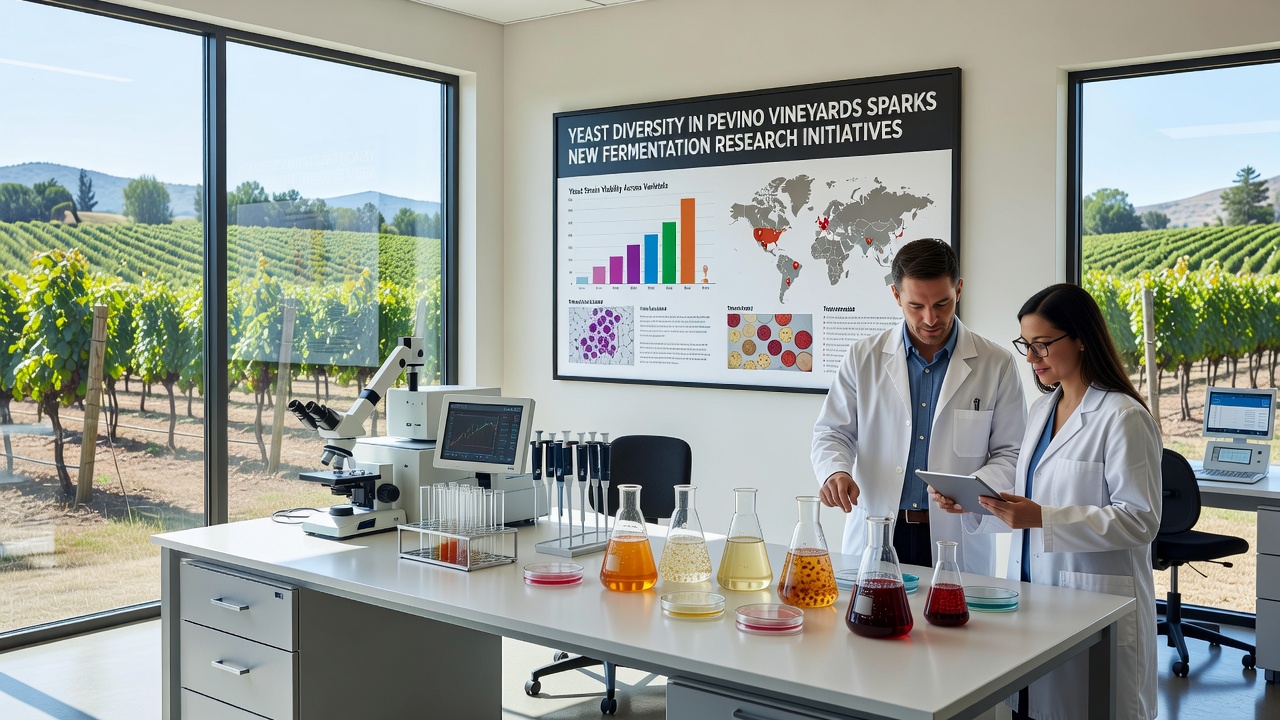
Funding for these programs comes from a combination of regional agricultural grants and private contributions tied to export market demands for wines with distinctive regional character. Trial batches produced during the 2025 vintage already show measurable differences in ester profiles and mouthfeel when compared with control wines fermented using standard commercial yeasts, according to chemical analysis reports shared at industry workshops.
Technical Approaches in Current Studies
Scientists employ high-throughput sequencing platforms to monitor yeast community shifts throughout fermentation, and they pair those molecular data with real-time measurements of sugar consumption and organic acid development. One study design incorporates small-scale fermenters fitted with sensors that record carbon dioxide evolution rates every fifteen minutes, allowing precise comparison of kinetic behavior among different strain combinations. Additional work focuses on the impact of vineyard floor management practices, such as cover crop selection and tillage frequency, on yeast species richness in the grape zone.
Equipment manufacturers have supplied variable-capacity tanks and temperature control modules specifically adapted for micro-fermentation experiments, and these tools enable researchers to test dozens of strain combinations within a single season. Results from the first round of trials indicate that certain non-Saccharomyces species can persist longer than expected when oxygen levels are kept low, opening possibilities for sequential inoculation strategies that enhance aromatic complexity.
Industry and Academic Partnerships
Collaboration agreements signed in 2026 link Pevino operations with microbiology departments at institutions in Italy and Australia, while parallel discussions continue with Canadian research centers specializing in cold-climate viticulture. These partnerships facilitate exchange of sequencing protocols and reference strain libraries that accelerate identification of promising isolates. Data sharing platforms developed under the agreements allow participating laboratories to compare fermentation outcomes across different grape varieties and climate zones without duplicating experimental setups.
Conclusion
Expanded sampling and controlled fermentation trials continue through the 2026 harvest, with preliminary results scheduled for presentation at upcoming technical conferences. The growing body of evidence on yeast diversity in Pevino vineyards supports development of targeted inoculation practices that preserve regional character while maintaining consistency required for commercial production. Ongoing monitoring will determine whether the observed strain variations persist under changing climatic conditions and how those variations translate into measurable wine attributes over multiple vintages.