Rosa Schmid · 27 September 2026
Tuscan Soil Microbes Shape Wine Characteristics for Global Export Markets
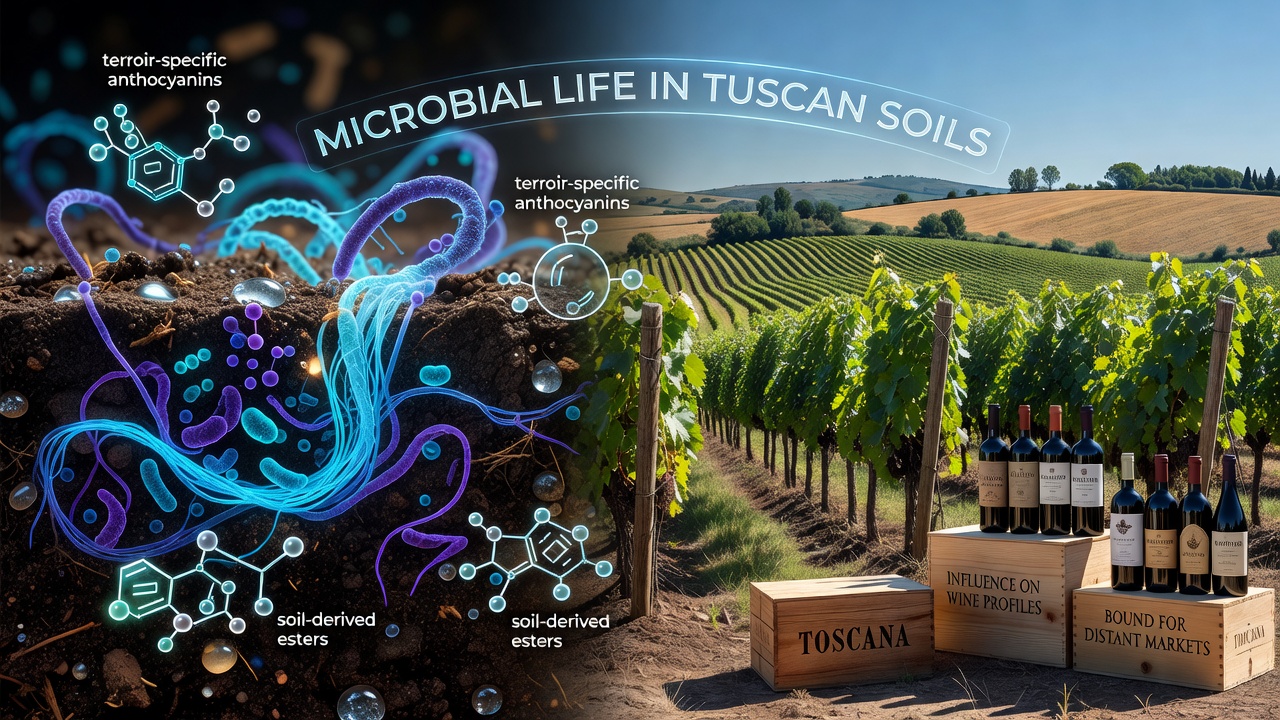
Tuscan vineyards host diverse microbial communities in their soils that interact with grapevines throughout the growing season, and researchers have documented how these interactions contribute to the chemical profiles found in finished wines shipped to international buyers. Studies from institutions across Europe and North America indicate that bacteria and fungi in the soil influence nutrient absorption, root development, and the production of secondary metabolites in grapes, which in turn affect aroma compounds, acidity levels, and phenolic structures that remain stable during long-distance transport.
Data collected from multiple Tuscan sites between 2023 and 2025 shows variations in microbial populations corresponding to differences in soil pH, organic matter content, and vineyard management practices, while observers note that these differences appear in wines destined for markets in Asia, North America, and Australia. According to findings published by research teams at the University of Florence, mycorrhizal fungi form symbiotic relationships with vine roots that enhance phosphorus uptake, and this process correlates with increased anthocyanin concentrations in Sangiovese grapes grown in Chianti and Montalcino zones.
Soil Microbial Diversity Across Tuscan Regions
Analyses of soil samples from Brunello di Montalcino, Chianti Classico, and Bolgheri reveal distinct bacterial phyla and fungal species that vary by elevation, drainage patterns, and historical land use, and these patterns influence how vines respond to seasonal stresses such as drought or excessive rainfall. In September 2026, monitoring programs conducted by regional agricultural agencies recorded shifts in microbial activity following late-summer heat events, with certain Actinobacteria populations increasing in drier plots while others declined in areas with higher moisture retention.
Evidence from collaborative projects involving Italian and Canadian research groups demonstrates that microbial diversity supports vine resilience, which helps maintain consistent grape quality across vintages shipped overseas. Those who track export statistics note that wines from vineyards with documented high microbial activity often exhibit lower susceptibility to oxidation during extended sea voyages, a factor relevant for containers traveling to ports in Singapore or Vancouver.
Influence on Fermentation and Flavor Development
Indigenous yeasts and bacteria present on grape skins and in the vineyard environment contribute to spontaneous fermentation processes used by some Tuscan producers, and laboratory tests confirm that these microbes introduce unique ester profiles and volatile compounds not replicated in inoculated fermentations. Research indicates that soil-derived lactic acid bacteria can modulate malolactic fermentation timing, which affects the final balance of malic and lactic acids in wines that undergo barrel aging before export.
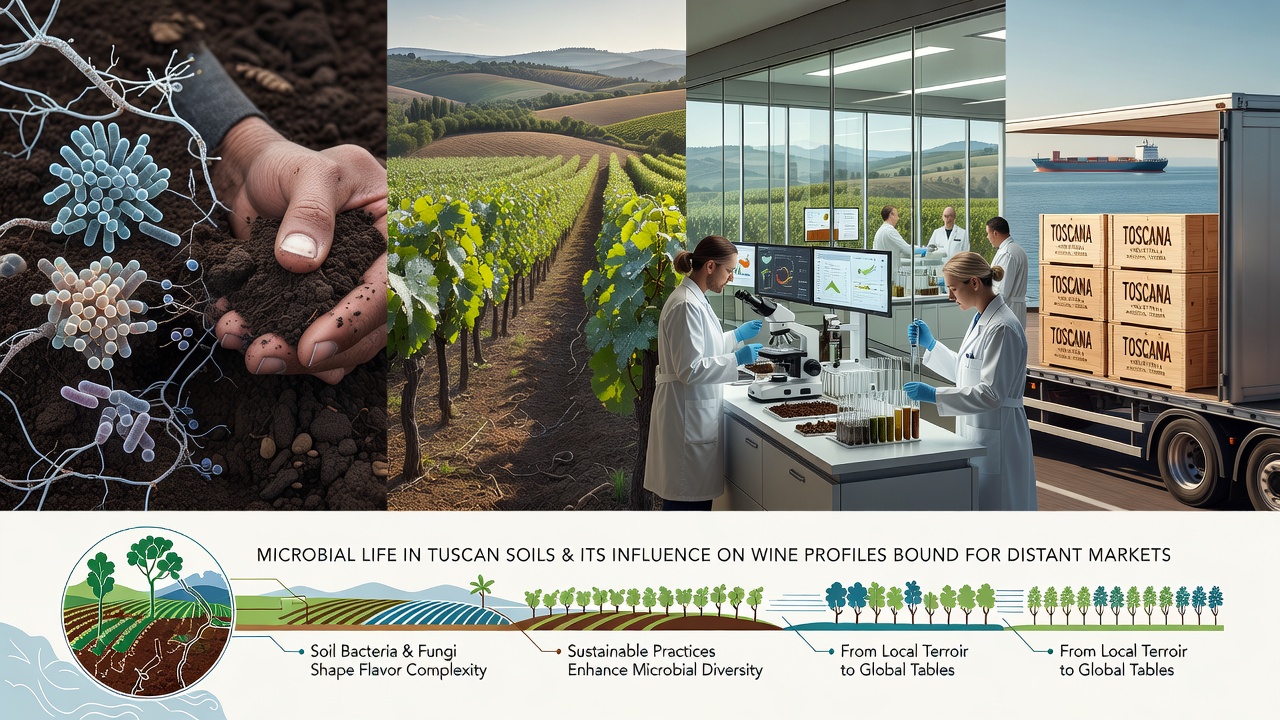
One study released in early 2025 by a consortium of European universities found correlations between specific soil fungal communities and the presence of norisoprenoids in finished wines, compounds associated with complex fruit and floral notes that persist after bottling. Producers shipping to distant markets have adjusted vineyard practices, including reduced tillage and cover crop selection, to support these microbial populations while maintaining yields required for commercial volumes.
Implications for Wine Stability During Transport
Wines bound for distant markets encounter temperature fluctuations, vibration, and pressure changes that can alter chemical stability, and microbial activity in the vineyard appears to influence the formation of protective phenolic structures that help wines withstand these conditions. Data from shipping trials coordinated by industry organizations in Australia and the European Union show that wines from microbially active soils retained higher levels of polymeric pigments after six months of simulated transit compared with those from conventionally managed plots.
According to reports from the Food and Agriculture Organization of the United Nations, soil health initiatives in Mediterranean regions have led to measurable improvements in grape composition that support longer shelf life once wines reach retail shelves in non-European countries. Observers tracking Tuscan export volumes through 2026 note continued interest from importers seeking wines with consistent sensory attributes regardless of shipping duration.
Management Practices and Microbial Populations
Vineyard operators in Tuscany have adopted techniques such as compost application, reduced herbicide use, and strategic irrigation scheduling that support beneficial microbial communities without compromising productivity, and field trials conducted since 2022 document increases in soil organic carbon alongside shifts in bacterial diversity. These changes coincide with adjustments in harvest timing and winemaking protocols aimed at preserving characteristics valued by international buyers.
Research published in peer-reviewed journals demonstrates that certain cover crop mixtures encourage mycorrhizal colonization, which in turn supports vine nutrient status during dry periods common in central Italy. Producers supplying distant markets have incorporated soil microbiome testing into their quality control processes, allowing them to identify plots that contribute specific sensory markers to blended wines.
Conclusion
Available evidence links microbial communities in Tuscan soils to measurable differences in grape chemistry and wine composition that affect performance in export channels, and ongoing monitoring programs continue to generate data on how vineyard practices influence these relationships. As producers adapt to demands from global markets, soil management strategies that maintain microbial diversity remain central to maintaining consistent profiles across shipping routes and storage conditions.